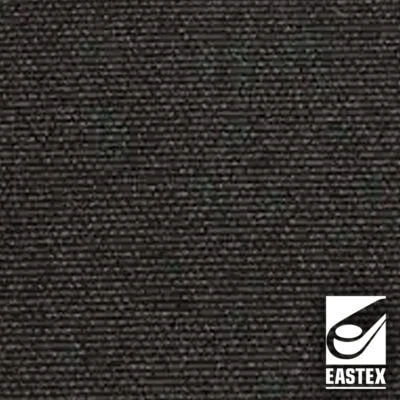
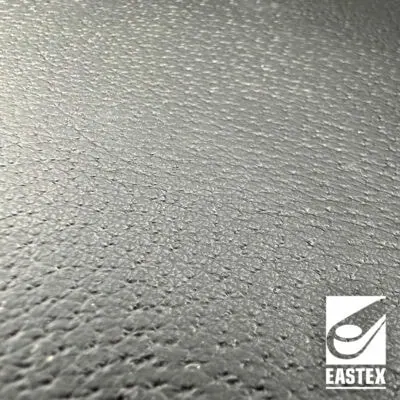
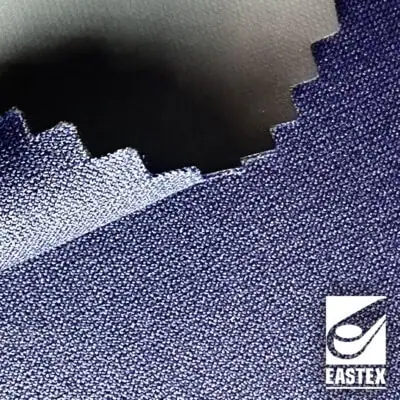
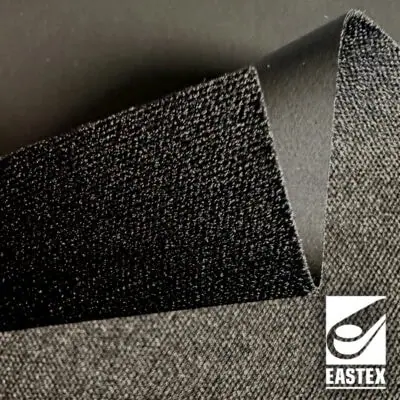
Technical Capabilities & Properties of Cast-Coated Knits
Eastex offers a diverse range of coated knits engineered for specialized performance.
Multi-Directional Stretch
Our fabrics, such as the Prima Stretch and Tek Stretch series, offer both two-way and four-way stretch capabilities. This flexibility is critical for applications like orthopedic support surfaces and patient transfer devices.
Advanced Polyurethane (PU) Coatings
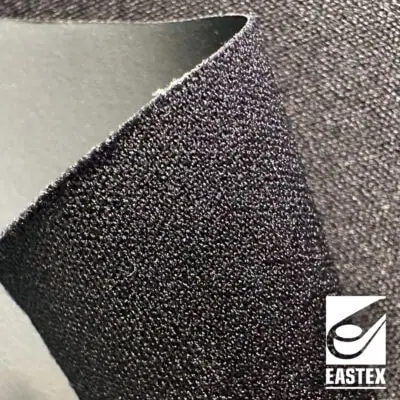
Our textiles feature 100% Polyurethane (PU) coatings and films applied to knit backers, delivering robust performance and a soft hand feel. The PU layer provides a significant level of water resistance, making these materials highly adaptable for outdoor and fluid-proof applications.
Protective and Restrictive Finishes
Eastex coated knits can be engineered with specific protective attributes, including antimicrobial and antibacterial treatments, as well as fire-resistant finishes that meet stringent regulatory standards, such as CAL 117.
Operational Benefits of Coated Knit Materials
Cast-coated fabrics offer functional and operational advantages that make them highly valuable across various industries.
Enhanced Aesthetics
A coated knit features a smooth, glossy, or matte finish that elevates visual appeal. This high-quality finish makes it ideal for applications where appearance is crucial, such as packaging, fashion, and high-end printing.
Printability and Improved Ink Adhesion
The smooth surface of a cast-coated fabric provides excellent printability. Due to its non-porous structure, the fabric’s ability to hold ink is highly efficient. This quality ensures sharp and vibrant prints, making the material suitable for detailed graphic designs and intricate patterns.
Water Resistance and Quick Drying
These fabrics are often coated with polyurethane, which provides a significant level of water resistance. The manufacturing process of cast-coated fabrics often results in materials that dry quickly. This property is highly advantageous in applications where moisture resistance and fast drying times are essential.
Unyielding Durability
The coating process enhances the fabric’s overall strength, making it highly resistant to wear and tear. This durability guarantees a longer lifespan for products made from cast-coated fabric, which is critical in demanding environments such as industrial and outdoor applications.
Precision Casting Processes in Textile Manufacturing
Cast coating is a manufacturing process where a liquid coating is meticulously applied onto a substrate, typically a fabric, using a casting method.
Application
A liquid coating is carefully applied directly to the surface of the fabric substrate.
Spreading
The coating is spread evenly across the fabric to ensure uniform coverage and consistent thickness.
Drying
The coated fabric is dried in a controlled environment, which allows the liquid to evaporate completely.
Solidification
Finally, the coating solidifies, creating a highly durable, smooth, glossy, or matte surface finish on the textile.
Applications for Coated Knits
Eastex coated knits are engineered for heavy-duty performance, providing reliable, highly functional technical solutions across a diverse range of demanding market segments.
Healthcare
Our cleanable, fluid-proof fabrics are designed specifically for medical support surfaces. With attributes like multi-directional stretch and antimicrobial finishes, these textiles are ideal for hospital mattresses, wheelchair cushions, and patient repositioning devices where strict hygiene and patient comfort are critical.
Marine
Engineered to withstand harsh environmental exposure, our coated textiles offer exceptional water resistance and durability. These properties make them highly suitable for marine upholstery, specialized covers, and seating applications that require long-term reliability against continuous moisture and outdoor wear.
Tactical
We provide highly durable stretch knits and slip-resistant finishes that meet rigorous performance standards for military and law enforcement applications. These robust textiles are designed for heavy-duty tactical gear, protective vests, and specialized equipment where material failure in the field is not an option.
Industrial
Built for extreme conditions, our coated fabrics provide essential chemical resistance, abrasion tolerance, and temperature stability. They are widely utilized in demanding industrial environments to manufacture heavy-duty protective covers, machinery enclosures, and specialized worker safety gear.
Travel & Outdoors
The high durability and advanced polyurethane coatings of our knits make them perfectly suited for rugged consumer goods. These waterproof, abrasion-resistant textiles ensure long-lasting performance and structural integrity for luggage, backpacks, tents, and specialized outdoor gear.